Follow up new requests
A new project request becomes a lead in the CRM, with context, a prepared introductory conversation and a proposed next step. See sales follow-up.
Gen8
Source: Marketing, communications and web agencies
Managed AI service for SMEs. We set up, connect and manage; you stay in control.
© 2026 Gen8 VOF · Dutch Chamber of Commerce 92978789 · Delft
Organisation type
An agency sells attention and execution, but loses hours moving between request, brief, planning, review and delivery. A workflow can prepare and propose there, while the agency keeps creative judgment.
Characteristics
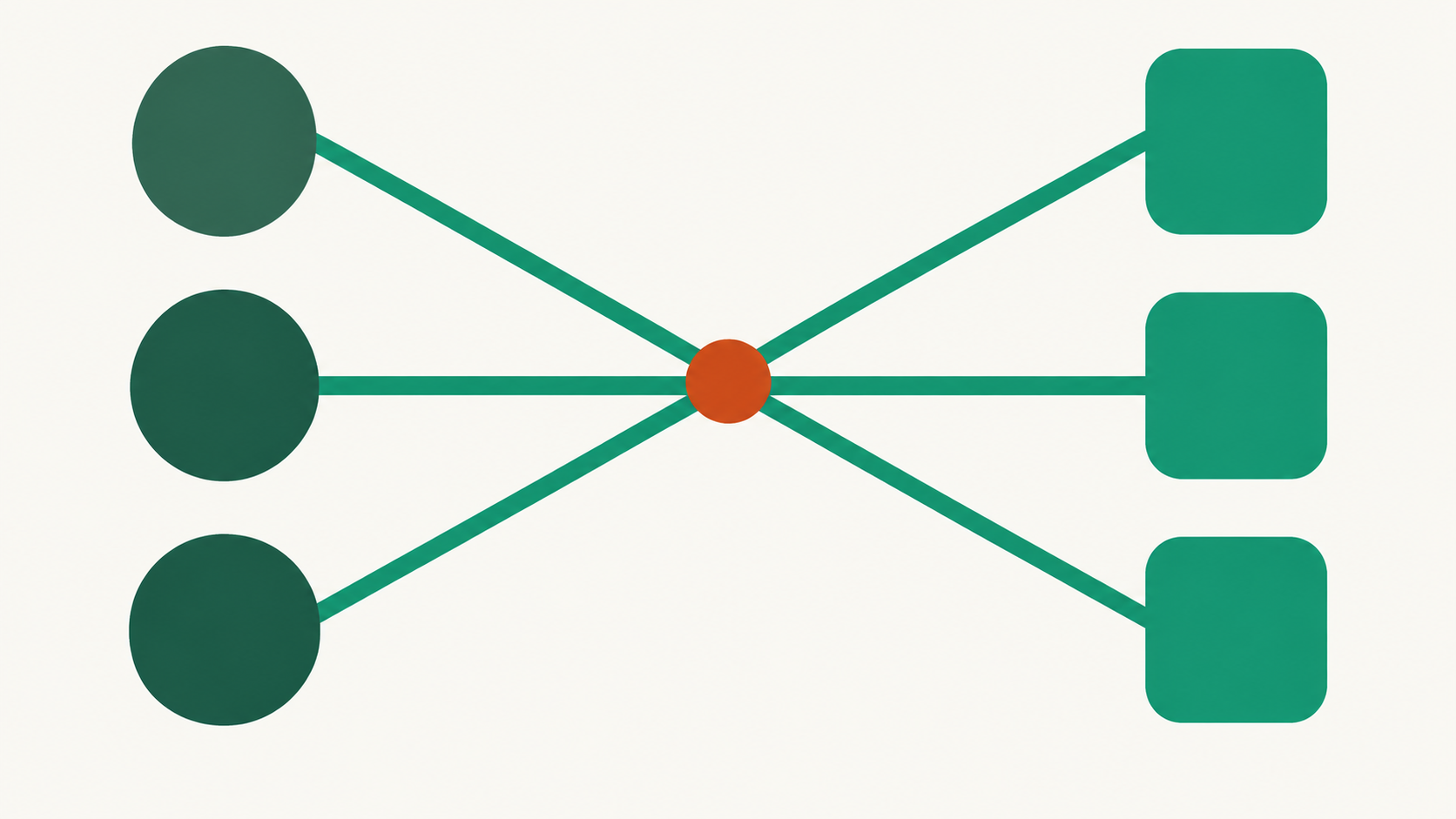
Agency work is many-to-many: several customers, several channels, several versions of the same piece. The creative decision is quick; gathering, coordinating and forwarding around it takes time.
The customer is watching too. A draft published without being asked costs more than it delivers. A workflow that prepares and asks for approval fits better than one that publishes independently.
Agencies also work with someone else's brand and data. What is allowed for customer A is not automatically allowed for customer B: separating access is central.
Limits
Creative choices and brand voice stay with the agency. A workflow prepares, summarises and stages; a person chooses what goes out. We do not publish without approval, even on channels where it would be technically easy.
Separation between customers is a design requirement: a workflow for customer A must not be able to access customer B's data. Search engines' views on AI-generated content change; we make no promises about that.
No. It takes over gathering, coordination and handoffs. Deciding what is good stays with the people paid to make that judgment.
Yes, and that is the starting point. Integrations and permissions belong to the customer's environment; you can reuse the workflow design.
Only if you explicitly configure that for actions with minor consequences. By default, it is a proposal approved by a person.